Think the Upper West Side’s green space begins and ends with Central Park and Riverside Park? Not quite. Some of the neighborhood’s most memorable outdoor places are the quieter ones tucked mid-block, below street level, or behind an unassuming gate, and knowing where to find them can change how you experience the area. If you want a more layered view of Upper West Side living, these hidden green spaces reveal the calm, block-by-block character that residents value. Let’s dive in.
Why hidden green spaces matter
The Upper West Side has a strong green identity, but it is not defined only by its biggest parks. NYC Parks says GreenThumb supports more than 550 community gardens and 20,000 members citywide, and notes that 40% of people live within a 10-minute walk of a GreenThumb garden.
That wider network helps explain why smaller spaces matter so much here. On the Upper West Side, greenery often feels distributed across the neighborhood rather than concentrated in just a few headline destinations.
For buyers, sellers, and renters, that everyday access shapes how a block feels. A shaded garden, a quiet lawn, or a wooded path can make the neighborhood feel more intimate, buffered, and livable.
Community gardens with local character
West Side Community Garden
At 123 West 89th Street between Amsterdam and Columbus, West Side Community Garden is one of the neighborhood’s best-known hidden gems. The garden describes itself as free and open to the public every day of the year, and it is run entirely by volunteers.
It is easy to see why this space stands out. The garden offers shaded seating, birdsong, and places to read or have coffee, along with events such as a tulip festival, concerts, movie nights, arts and crafts festivals, and Shakespeare performances.
It also carries a rare distinction. According to its own site, it is the only privately owned example of its kind in New York City.
West 104th Street Garden
West 104th Street Garden, at 8 West 104th Street, shows how a small garden can serve as part landscape and part neighborhood infrastructure. NYC Parks’ GreenThumb newsletter says the garden has been stewarded for more than 30 years.
The space includes membership plots, native planting beds, composting, and rainwater harvesting systems. That mix gives it a distinctly local feel and reflects the long-term care that often defines the Upper West Side’s smaller green spaces.
West 87th Street Park & Garden
Not every meaningful green space comes with a big public profile. West 87th Street Park & Garden, at 55-57 West 87th Street, appears in New York City’s Food Metrics report.
Even with limited public-facing detail, its inclusion in city data says something important. The Upper West Side’s green network includes small, less branded parcels as well as more widely recognized gardens, which adds to the neighborhood’s calm, lived-in texture.
Quiet corners of Central Park’s west side
Central Park may be world-famous, but parts of its west side still feel surprisingly secluded. The Central Park Conservancy even offers a self-guided route focused on peace and quiet that links several calmer landscapes in about a mile.
That route is a useful reminder that hidden green space on the Upper West Side is not limited to tiny gardens. Some of the neighborhood’s quietest outdoor moments are found within Central Park itself, especially if you know where to turn.
Strawberry Fields
Strawberry Fields sits on the west side of Central Park between 71st and 74th Streets. The Conservancy designates it as a Quiet Zone and describes it as a living landscape of peace and respite.
Beyond the well-known Imagine mosaic, the area includes small meadows, benches, and a wooded path. It blends a landmark destination with a calm, reflective atmosphere that feels very much in step with the Upper West Side.
Naturalists' Walk
Naturalists' Walk stretches from 77th to 81st Streets along the park’s west side. It is sunken below street level, which helps create a sense of separation from the surrounding city.
The Conservancy describes shade, woodland plants, a rustic bridge, and a small stream. It is an ideal spot for relaxing, picnicking, walking, and observing nature without feeling like you are in the middle of a major urban park.
Arthur Ross Pinetum
Between 84th and 86th Streets, the Arthur Ross Pinetum offers a different kind of quiet. This four-acre arboretum contains 17 species of pine trees, creating an evergreen-forest feel that stands out in every season.
Within the same landscape, Pinetum Playground remains open and unfenced, with swings, exercise bars, and picnic tables among the trees. That combination makes the area feel both practical and peaceful, which is part of what gives the Upper West Side its everyday appeal.
West 86th-90th Street Landscape
Just west of the Reservoir, the West 86th-90th Street Landscape offers rolling lawns and large trees in a relatively low-key setting. The Conservancy notes that the area was restored in 2017.
If you want a place for relaxing, sunbathing, or a picnic without the density of the park’s biggest attractions, this meadow is worth knowing. It is one of the clearest examples of a Central Park space that feels calm rather than crowded.
Riverside Park’s quieter edge
Riverside Park often gets recognized for its waterfront path and broad river views, but it also has a more contemplative side. NYC Parks notes that the park extends four miles from 72nd to 158th Streets and is one of only eight officially designated scenic landmarks in New York City.
The park also includes passive recreation areas where no dogs, radios, or team sports are allowed. On the Upper West Side, those areas include Linda’s Lawn at 66th Street near the river, South Lawn at 73rd to 75th Streets near Riverside Drive, and North Lawn at 80th to 82nd Streets near Riverside Drive.
These spaces help explain why Riverside Park can feel quieter than many people expect. If you think of it only as a busy waterfront route, you may miss some of its most restorative corners.
Private green settings that shape the streetscape
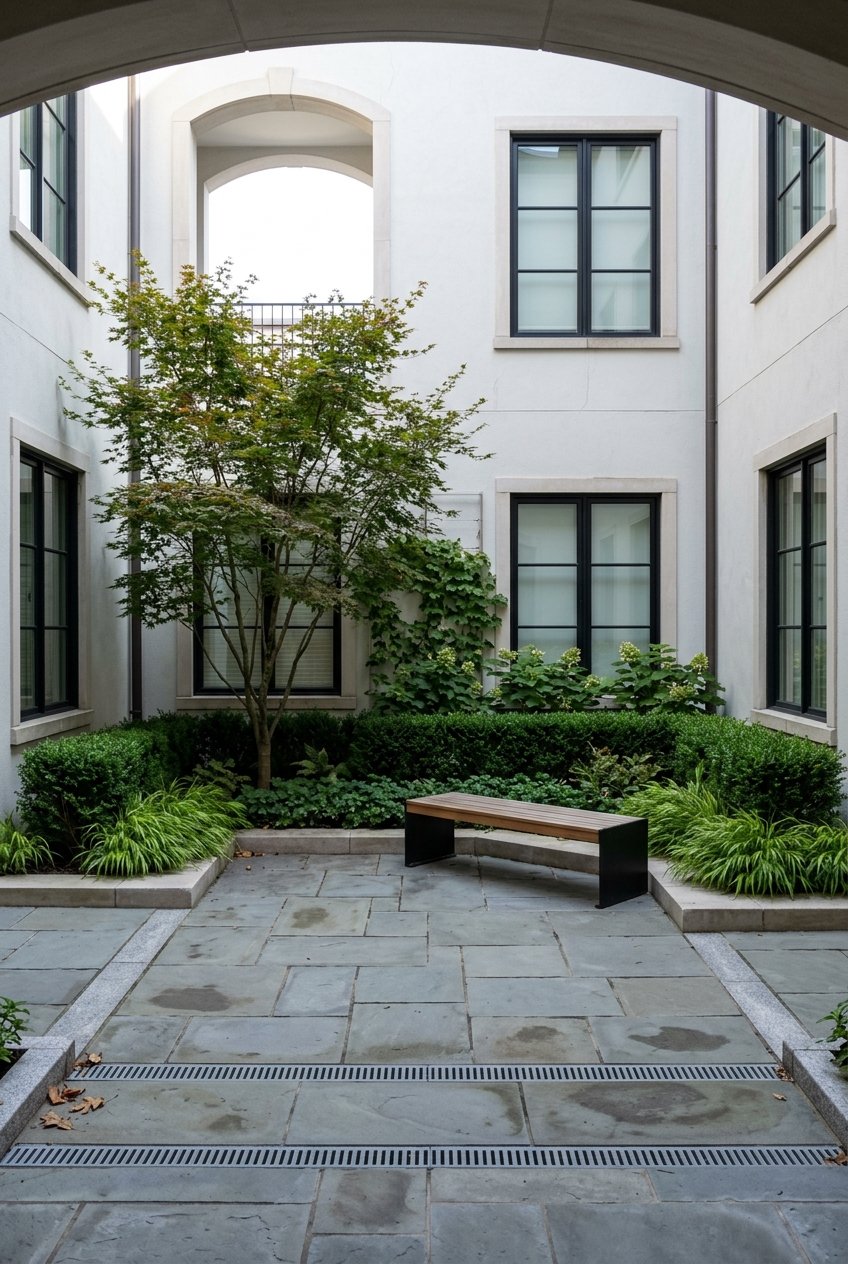
Not every green space on the Upper West Side is public, but even private landscapes influence how the neighborhood feels. They add to the sense that many blocks are softened by interior gardens, courtyards, and planted edges.
For anyone thinking about buying or selling here, those details matter. They contribute to the neighborhood’s visual rhythm and help explain why certain stretches of the Upper West Side feel especially sheltered and serene.
Pomander Walk
Pomander Walk runs through the middle of the block bounded by Broadway and West End Avenue, 94th and 95th Streets. The Landmarks Preservation Commission describes it as secluded from the street and entered through gates at either end.
It was intentionally designed to recreate a village atmosphere. Even though it is not a public park, it remains one of the most distinctive examples of the Upper West Side’s private-green feel.
Courtyard living on the Upper West Side
Landmark West notes that the Belnord encloses a landscaped courtyard and that Astor Court routes residents through an interior garden. These are residential settings, not public destinations.
Still, they help tell the story of the neighborhood. On the Upper West Side, greenery often appears not only in parks but also at the scale of an entry sequence, a shared courtyard, or a planted interior block.
What these spaces say about Upper West Side living
Hidden green spaces do more than offer a pleasant walk. They reveal how the Upper West Side balances city energy with quiet, shaded, and often surprisingly secluded places.
That balance is part of what makes the neighborhood so enduring. You can have access to major cultural institutions, transit, and classic streetscapes while still finding a small garden, a wooded path, or a passive lawn within your regular routine.
For homeowners and buyers alike, these details help define lifestyle in a practical way. They shape your morning route, your weekend rhythm, and the feel of a block long after the first showing or closing day.
If you are considering a move on the Upper West Side, understanding the neighborhood at this level can make a real difference. For tailored guidance on buying, selling, or evaluating a property in Manhattan, connect with Ann Ferguson LLC.
FAQs
What are some hidden green spaces on the Upper West Side?
- Some notable examples include West Side Community Garden, West 104th Street Garden, West 87th Street Park & Garden, Naturalists' Walk, Strawberry Fields, the Arthur Ross Pinetum, and quieter lawns in Riverside Park.
Is West Side Community Garden on the Upper West Side open to the public?
- Yes. West Side Community Garden says it is free and open to the public every day of the year.
Where can you find quieter areas of Central Park on the Upper West Side?
- Good options include Strawberry Fields between 71st and 74th Streets, Naturalists' Walk from 77th to 81st Streets, the Arthur Ross Pinetum between 84th and 86th Streets, and the West 86th-90th Street Landscape near the Reservoir.
Are there quiet places in Riverside Park on the Upper West Side?
- Yes. NYC Parks identifies passive recreation areas on the Upper West Side, including Linda’s Lawn, South Lawn, and North Lawn, where no dogs, radios, or team sports are allowed.
Do private courtyards affect Upper West Side neighborhood character?
- Yes. Private settings such as Pomander Walk, the Belnord courtyard, and Astor Court’s interior garden help create the buffered, intimate, and green feel that many Upper West Side blocks are known for.