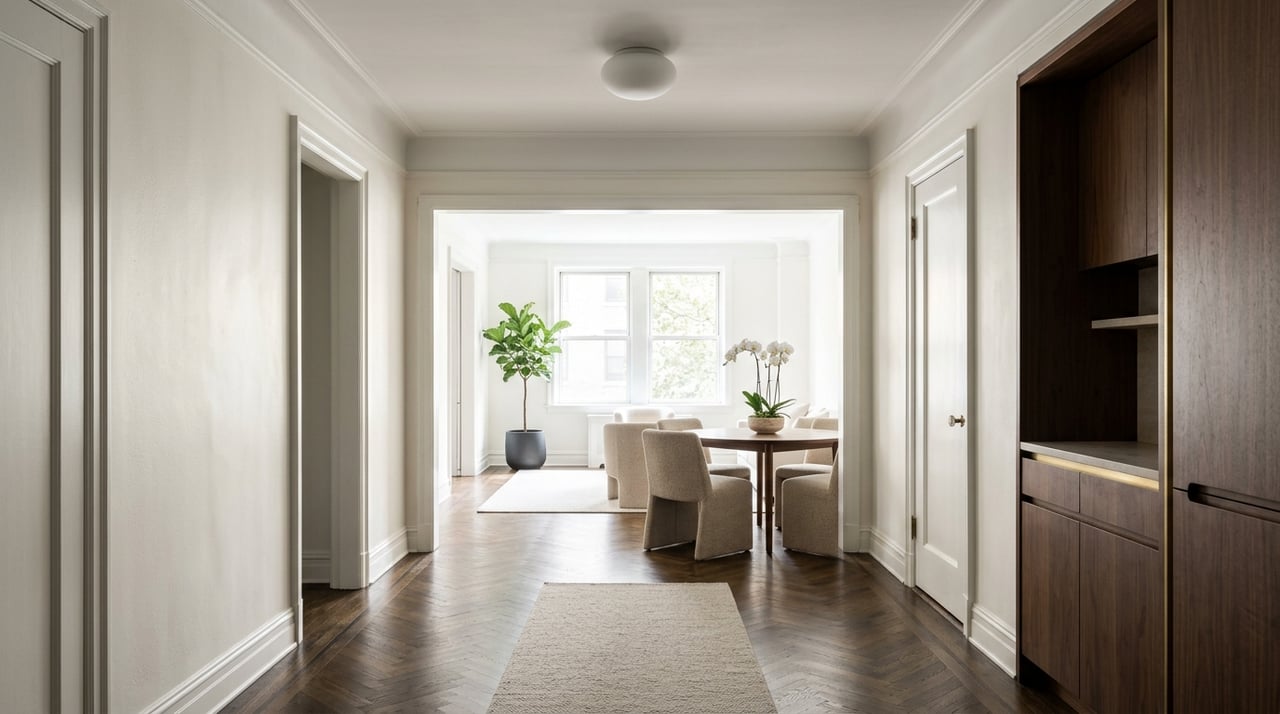
Wondering whether that Upper East Side floor plan shows a smart layout or just a smart marketing spin? You are not alone. If you are comparing co-ops and condos online, a floor plan can tell you a great deal before you ever book a showing. The key is knowing what to look for, what labels to question, and how Upper East Side layouts tend to reflect the neighborhood’s housing stock. Let’s dive in.
Why Upper East Side floor plans look different
The Upper East Side has a distinct mix of older co-ops and newer condos, and that shows up clearly on floor plans. Historic architecture remains a defining feature of the neighborhood, and new development has moved more slowly in many areas because substantial portions of the neighborhood sit inside historic districts.
That helps explain why pre-war layouts are still so common here. In many Upper East Side buildings, you will see more room separation, more formal circulation, and more small utility spaces than you might find in a newer downtown-style condo.
By contrast, newer Upper East Side condos often show a very different layout logic. Open living areas, larger window walls, high ceilings, in-unit laundry, terraces, and fewer homes per floor usually create a more contemporary feel on paper and in person.
Start with the plan basics
Before you focus on room names, start by reading the drawing itself. A floor plan is a top-down view of the apartment, and the symbols matter as much as the labels.
Look first for these basics:
- A legend that explains symbols
- A scale that helps you judge room size
- A north arrow for orientation
- Thick wall lines that often indicate exterior walls
- Door swing arcs that show how doors open
- Breaks in walls that mark windows
- Stairs and arrows that show direction of travel
This first pass helps you avoid a common mistake: falling in love with a room label before you understand how the home actually works.
Check windows before bedrooms
In Manhattan, this is one of the most important steps. Before you count bedrooms, confirm which rooms actually have windows.
According to the New York City Department of Buildings, bedrooms must have a window. StreetEasy also notes that a room should not count as a bedroom if someone has to pass through it to reach another part of the apartment.
That means a floor plan may show a room that looks useful but does not function as a legal bedroom. If you are reviewing listings online, treat any second or third bedroom claim carefully until you confirm windows and circulation.
Read the circulation, not just the square footage
Square footage matters, but flow matters too. A large apartment can still feel awkward if too much space is lost to hallways, stairs, or hard-to-furnish corners.
As you review a floor plan, ask yourself a few simple questions:
- Do you have to walk through one room to reach another?
- Are the public and private spaces clearly separated?
- Is there enough uninterrupted wall space for furniture?
- Do doors swing into useful areas?
- Are windows concentrated in only one part of the home?
These questions can help you compare two homes that may look similar in size but feel very different in daily life.
How to read a classic six
A classic six is one of the most recognizable Upper East Side layouts. StreetEasy defines it as a pre-war apartment with six real rooms: a living room, formal dining room, kitchen, two bedrooms, and a smaller bedroom off the kitchen.
On a floor plan, a classic six often signals formality and structure. You will usually see separate rooms rather than one large open living space, and that can create stronger privacy and more defined uses for each area.
Classic six layouts can also offer hidden value through closets, pantries, and service space. Those features may not stand out at first glance, but they can make the apartment more functional than raw square footage alone suggests.
At the same time, these homes may feel less airy on paper if many windows are concentrated in only a few main rooms. That does not make the layout worse. It simply means you should weigh privacy, storage, and room definition against openness and light.
What to look for in a classic six
When you review a classic six floor plan, pay close attention to:
- The location of the smaller bedroom off the kitchen
- Closet and pantry placement
- The relationship between the dining room and living room
- Whether bedroom areas are tucked away from entertaining spaces
- How much hall space connects the rooms
On the Upper East Side, these details often reveal why a pre-war co-op feels elegant and practical even when the layout is less open than a newer condo.
How to read a junior four
A junior four, often written as JR4, is typically a one-bedroom with four separate rooms. Most often, those rooms are a bedroom, kitchen, living room, and dining room.
This type of layout can be appealing if you want flexibility without stepping up to a full two-bedroom footprint. The extra room may work as a dining area, den, or office, depending on the plan and the apartment’s features.
You should be especially careful when a junior four is marketed as a two-bedroom. If the fourth room has been enclosed, it still must meet legal window requirements to count as a bedroom.
What to look for in a junior four
Focus on these points:
- Whether the fourth room has a window
- Whether the room is pass-through
- How enclosed the extra space really is
- Whether the layout still leaves enough light for the main living area
A strong junior four can offer flexibility. A weak one can feel like a one-bedroom with an awkward compromise.
How to read a duplex
A duplex in New York City is a two-floor apartment connected by stairs or an elevator. On a floor plan, the stair location is one of the first things you should study.
Stairs affect more than movement between floors. They also take up floor area, reduce usable wall space, and influence furniture placement. In some layouts, the stair creates a clean separation between entertaining and sleeping areas. In others, it interrupts the apartment more than buyers expect.
StreetEasy also notes that both floors of a duplex must have a legal minimum ceiling height of 8 feet. While a floor plan may not tell you everything about volume, it can still show whether the upper and lower levels seem thoughtfully organized.
What to look for in a duplex
As you read a duplex plan, check:
- Where the stairs land on each level
- How much wall space the stair removes
- Whether bedrooms are grouped away from public rooms
- Whether the circulation between floors feels convenient
On the Upper East Side, duplexes can be compelling, but the stair should earn its footprint.
How to read a modern condo layout
Newer Upper East Side condos often read very differently from pre-war co-ops. CityRealty examples highlight open-concept living areas, floor-to-ceiling windows, high ceilings, in-unit washer and dryers, terraces, and relatively few homes per floor.
On a floor plan, that usually translates to fewer interior partitions and a stronger emphasis on light. You may see a large combined living and dining area rather than a series of separate formal rooms.
This can feel fresh and convenient, especially if you value openness and simple circulation. The tradeoff is that you may find less built-in storage, less room-by-room separation, and fewer tucked-away utility spaces than in a classic pre-war apartment.
What to look for in a modern condo
When reviewing a newer condo plan, pay attention to:
- The width and depth of the open living area
- Window placement across the main rooms
- Terrace access points
- Laundry placement
- Closet count and storage depth
- How many walls are available for furniture or art
Open plans can look generous online, but the best ones still provide clear zones for living, dining, and daily routines.
Spot renovation potential carefully
A floor plan can hint at what might be changed, but it does not tell you what is legally or practically allowed. In New York City, the Department of Buildings states that most construction requires permits.
Kitchen and bathroom projects often need a Professional Engineer or Registered Architect and an ALT2 application. Moving a load-bearing wall is also specifically listed as permit work.
Some cosmetic work may not require a permit, including painting, plastering, installing cabinets, and some floor resurfacing. Still, if you are evaluating an apartment based on possible changes, it is wise to separate what looks possible on paper from what may be approved in practice.
Four smart questions before you tour
Once you have reviewed the layout, do one final pass and ask these four questions:
- Which rooms actually have windows?
- Is any claimed bedroom pass-through or windowless?
- Would any desired wall changes affect structure or plumbing?
- In a duplex, does the stair take away too much usable wall length?
These questions are especially useful on the Upper East Side. Pre-war plans often trade openness for formality, while modern condos often trade compartmentalization for light and flexibility.
Why floor-plan reading matters on the Upper East Side
The Upper East Side is one of those markets where layout literacy really pays off. Two apartments with similar square footage can live very differently depending on whether they are pre-war co-ops, junior fours, duplexes, or newer condos.
If you know how to read windows, circulation, room count, and storage, you can save time and tour with more confidence. You can also ask better questions early, which tends to lead to better decisions later.
If you want experienced guidance as you compare Upper East Side co-ops and condos, Ann Ferguson LLC offers senior-led, hands-on representation designed to help you evaluate layouts, navigate the market, and move forward with clarity.
FAQs
How do you read an Upper East Side apartment floor plan correctly?
- Start with the legend, scale, north arrow, walls, doors, windows, and stairs before you focus on room labels or square footage.
What makes an Upper East Side classic six different from a modern condo layout?
- A classic six usually has separate formal rooms, stronger privacy, and more storage, while a modern condo layout often emphasizes open living space, light, and convenience features.
Can a junior four on the Upper East Side count as a true two-bedroom?
- Only if the extra room meets legal bedroom requirements, including having a window.
What should you check on an Upper East Side duplex floor plan?
- Study where the stairs are located, how much wall space they take up, and whether they improve or disrupt the separation between public and private areas.
Can you tell renovation potential from an Upper East Side floor plan?
- A floor plan can suggest possibilities, but New York City Department of Buildings rules determine what work requires permits and what changes may actually be allowed.
Why are older apartment layouts so common on the Upper East Side?
- The neighborhood includes many historic buildings and historic districts, which helps explain why pre-war layouts remain a major part of the local housing stock.